
You can read about places, but there is a point where you reach the limit of what you can take in without actually being there.
My first semester abroad experience was in Santiago de Compostela, which, for most people, is famous for the pilgrimage. A lot of people who heard I was going there thought I was doing the Camino.
But anyway, my neighbors are planning a trip to Fatima, Portugal, and they will stop by Santiago on their way back.
Of course, that place is near and dear to me. It’s a beautiful, foggy, rainy oasis of calmness. During my time there, I learned so much about the whole region. It is truly a beautiful region with such rich history (part of it, especially for Santiago, being that the pilgrimage was started by the European aristocracy and royalty who, in the Middle Ages, could afford the pilgrimage/travel, hence the inflow of gold in the region).
When I heard they were going there, I considered it my time to shine. I spent half a year there. I could prepare them for everything they need to know/visit/do/try.
And it got me thinking, among other things, about coffee. Coffee is very important in the Balkans, so I figured I might have a few recommendations for them.
Now back to that initial thought about learning about places.
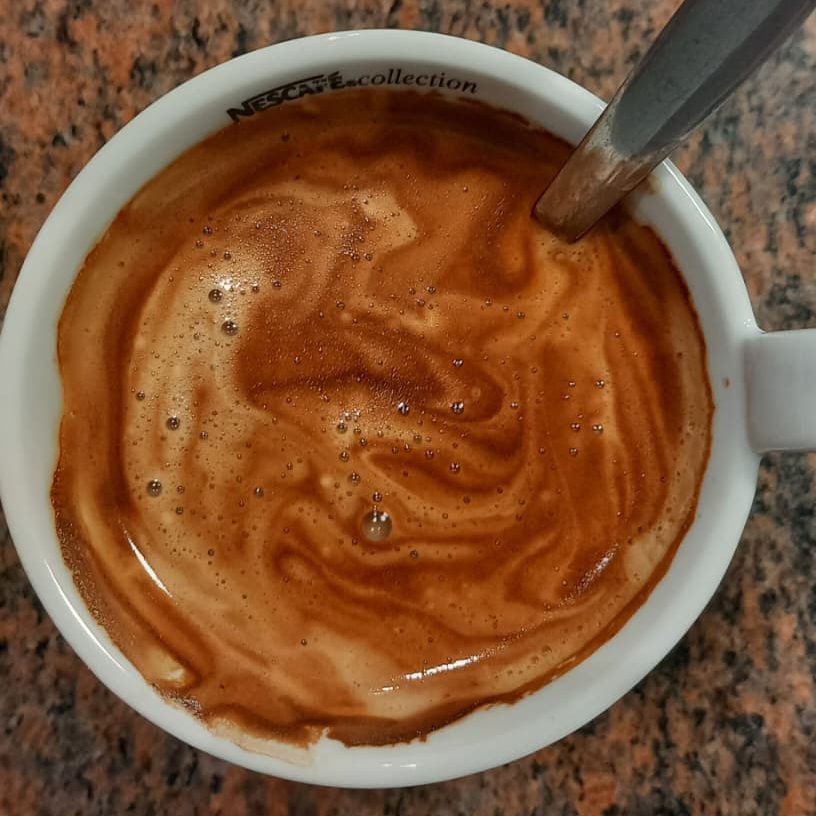
In all my time there, I didn’t have good coffee. Or, actually, it wasn’t to my liking. I tried many cafes. I prepared it myself in my accommodation, but something about it was peculiar to me.
Now, when I prepared my coffee, keep in mind I was a student, so it was all budget-friendly. There was this type called mezcla. This isn’t a brand. It’s a type of coffee, and I knew it meant “mixed”.
It didn’t occur to me to ask about this or consider that there might be a reason for this coffee type. I took it at face value, as I was used to the coffee back home.
This was a long introduction to tell you about mezcla, a blend of roasted natural beans, which make up about 70% of the mix, and torrefacto.
Torrefacto beans are made by coating the beans in sugar in the final stages of roasting. It was done to prolong the coffee supply and lower the cost in the post-Civil War era. Today, it is more like a custom, something the locals are used to and prefer in terms of taste.
Sugar cannot caramelize at such high temperatures. Instead, it leaves a coating that is burned black and tastes a bit bitter, creating the effect of stronger coffee.
Had I tried the coffee and didn’t like it, I would have concluded that Spain doesn’t have good coffee (which would be a gross exaggeration anyway, because I haven’t been to all of Spain, and there are other options besides mezcla).
This way, I saw, tried, and learned a bit about the history I knew virtually nothing about. It would never have occurred to me that this would be a reason, but now it highlighted what it means to know a place, what it means to travel, and to travel intentionally.
(I spent years after wondering about this coffee until I found out why.)
Discover more from My Little Hawk
Subscribe to get the latest posts sent to your email.


And I’m sure that’s a satisfying order.🤩 Right! We can’t just declare that the country has poor coffee entries if we never traveled all around. Wonderful, Katarina.
LikeLike
This is exactly it, a coffee cup holding centuries of history. You could have concluded Spain just doesn’t make good coffee, but instead you stayed curious. And years later, mezcla finally told you its story: sugar and survival and what a whole nation learned to love. That’s the difference between visiting and actually being somewhere.
LikeLike
Sugar used to be a preservative back in the day maybe this was how it was stored and the flavour profile was a side effect. I only assume of course there might be other reasons. Great looking coffee is it a latte?
LikeLike